
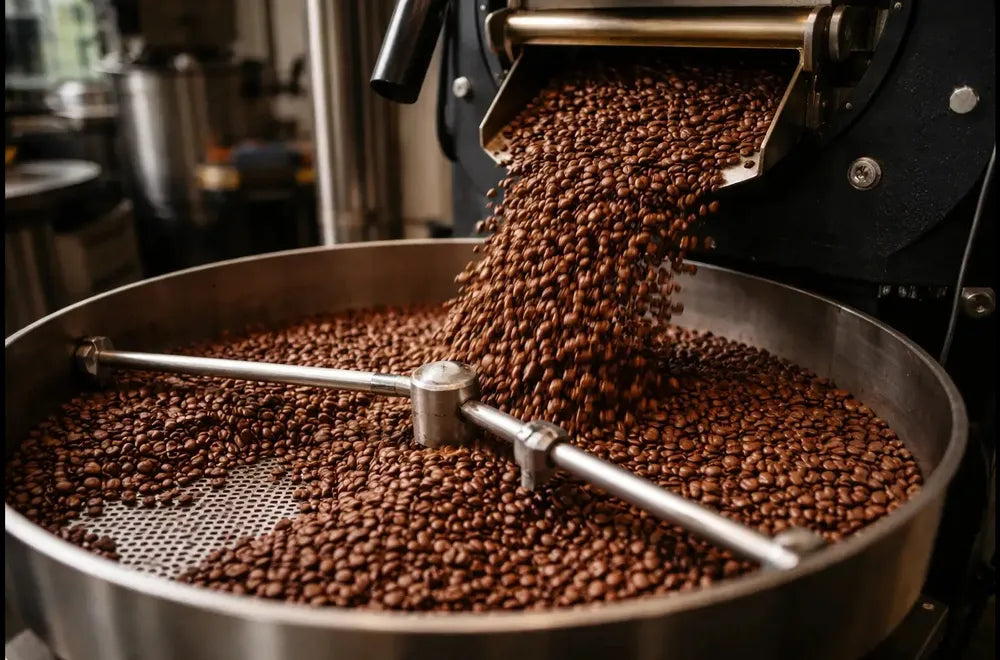
Slot roasting is a service where you book time at a professional roastery to roast coffee using their equipment - without buying a roaster yourself. For UK cafés looking to launch an own-brand coffee, it is the fastest and lowest-risk way to get there. With the UK branded coffee shop market now exceeding 12,300 outlets, standing out matters more than ever - and serving a blend that nobody else can buy is one of the strongest differentiators an independent café can offer.
Storm Coffee Supplies (SCS) offers slot roasting from the Battersea roastery, giving cafés, restaurants and hospitality businesses a direct path from green beans to branded bags. This guide explains what slot roasting actually is, how it compares to contract roasting and white-label coffee, and how to decide whether own-brand beans are the right move for your site.
What Is Slot Roasting?
Slot roasting means booking a production slot at a professional roastery. You bring your green coffee (or source it through the roaster), develop a roast profile with expert guidance, and leave with freshly roasted beans ready for your own branding. You pay for the time and facility rather than investing in roasting equipment of your own.
You may also hear the term toll roasting - the two are related, but toll roasting more often describes a hands-off arrangement where the roastery does the roasting for you (closer to contract roasting). With slot roasting, you are at the controls.
The model works like renting a commercial kitchen. The roastery provides the drum roaster, cooling tray, quality-control tools and trained staff to help you get a consistent result. You control the recipe - the origin, the blend ratio, the roast level and the development time. The roastery handles the infrastructure.

A typical slot roasting session runs between two and four hours, depending on batch size and the number of roasts you want to complete. Most roasteries set a minimum batch - often around 10-15 kg of green coffee per roast - but the threshold varies by facility and roaster size. SCS offers slot roasting in Battersea, where businesses can work alongside experienced roasters to develop and refine a house blend or single-origin offering.
The appeal is access. Buying a commercial drum roaster, fitting out a roasting space, obtaining extraction and ventilation, and passing fire-safety and environmental inspections is a significant capital commitment - often tens of thousands of pounds before you roast your first kilo. Slot roasting sidesteps all of that. As Perfect Daily Grind noted, slot roasting is making specialty coffee production more accessible to small operators and new entrants who could not otherwise afford to roast commercially.
Slot Roasting vs Contract Roasting vs White-Label Coffee
Slot roasting, contract roasting and white-label coffee all let you sell beans under your own brand name, but they differ in how much control you have over the roast, what you pay, and how involved you are in the production process. The right model depends on your volume, your available time and how closely you want to be connected to the roasting itself.
| Model | Your involvement | Control over roast profile | Best for |
|---|---|---|---|
| Slot roasting | You roast (with support) | Full | Cafés wanting hands-on control and a truly unique roast |
| Contract roasting | Roastery roasts for you | Shared (you approve the profile) | Sites with steady volume but limited time to roast |
| White-label coffee | Minimal - pick from a menu | Limited (pre-set profiles) | Businesses wanting branded bags quickly with minimal effort |
Slot roasting gives you the most control. You are physically present during the roast, adjusting charge temperature, airflow and development time with guidance from the roastery team. That hands-on involvement means you understand your coffee at a deeper level - useful when it comes to dialling in at the bar and explaining the product to your customers.
Contract roasting hands the roasting process to the roastery entirely. You supply or specify the green beans, agree a roast profile, and the roastery produces and packages the finished coffee to your spec. This suits businesses that need consistent supply but do not have the time or inclination to roast in person. Contract roasting often works well for multi-site operators or office coffee suppliers with predictable weekly volumes.
White-label coffee is the most hands-off option. A roaster offers a menu of existing blends and single origins, and you choose one (or several) to be packaged under your branding. The coffee itself is not unique to you - other businesses may be buying the same blend under their own labels. It is the fastest route to branded bags, but the trade-off is that your coffee is not exclusive.

Why Are More UK Cafés Launching Own-Brand Coffee?
Own-brand coffee gives independent cafés a product that chains cannot replicate. In a market where customers can buy a flat white on almost every high street, the beans in the hopper are one of the few things a single-site café can genuinely own. That exclusivity drives loyalty, supports higher margins and creates a secondary revenue stream through retail bag sales.
Three trends are pushing the shift:
- Customer interest in provenance. Specialty coffee drinkers increasingly ask where their coffee comes from, who roasted it and how it was processed. Own-brand beans let you tell that story from origin to cup - especially if you roast the coffee yourself through slot roasting, where you can speak with firsthand authority about the roast profile and why you chose it.
- Margin pressure. Buying wholesale beans from a third-party roaster is convenient, but you are paying for their brand, their packaging and their margin on top of the green cost. Roasting your own (or having it contract-roasted to your spec) can improve your cost per kilo, particularly once your volume is steady enough to buy green coffee in larger lots.
- Retail bag sales. A well-designed branded bag on the counter is passive revenue. Customers who enjoy the coffee in-store take it home. Once established, retail bean sales can become a meaningful addition to café turnover without requiring extra staff or equipment.
SCS supports this through wholesale coffee and tasting sessions, where businesses can sample origins and blends before committing to a roast profile or wholesale order.

Is Own-Brand Coffee Right for Your Café?
Own-brand coffee is not for every site. It works best for cafés that already have a strong local identity, a stable customer base and the operational bandwidth to manage another supply chain element. Before committing, weigh up five factors.
- Volume. Most roasteries set a minimum batch size. If your site gets through less than 5 kg of beans a week, the logistics of regular slot roasting sessions may not justify the effort. Contract roasting or a white-label arrangement may be more practical at low volumes.
- Brand ambition. Own-brand coffee makes the most impact when it is part of a broader identity - your name on the cup, the bag, the menu board and the social channels. If you are already building a recognisable local brand, own-brand beans strengthen the story. If coffee is secondary to your food offering, the return may be smaller.
- Time commitment. Slot roasting requires you or someone on your team to attend sessions at the roastery. That means time away from the café floor. Contract roasting removes this requirement but gives you less control over the finished product.
- Storage and freshness. Roasted coffee is at its best within two to six weeks of roasting, depending on roast level and brew method. You need somewhere cool and dry to store bags, and you need to manage batch sizes so you are not sitting on stale stock or running out mid-week.
- Staff training. A new blend or single origin means your baristas need to understand what they are working with - the ideal dose, the grind setting, the flavour notes to communicate to customers. Our guide to brewing the perfect espresso shot covers the extraction fundamentals, and SCS offers SCA-accredited barista training that covers dialling-in and sensory skills - a natural pairing with launching an own-brand coffee.
If you are already getting through 10 kg or more per week and want a product that is uniquely yours, slot roasting is worth exploring.
Frequently Asked Questions
What is slot roasting in coffee?
Slot roasting means booking a time slot at a professional roastery to roast your own coffee using the roastery's equipment. You bring or source green beans, develop a roast profile with expert guidance, and leave with freshly roasted coffee ready for your own branding. The related term toll roasting usually refers to a hands-off model where the roastery does the roasting for you.
How much does slot roasting cost in the UK?
Costs vary by roastery and session length. Some UK roasteries charge by the hour, while others price per kilogram of roasted output. The total cost depends on batch size, the number of roasts per session, and whether green bean sourcing is included. Contact SCS for current pricing at the Battersea roastery.
What is the difference between slot roasting and contract roasting?
With slot roasting, you physically attend the roastery and roast the coffee yourself with support from the roastery team. With contract roasting, the roastery handles the entire roasting process on your behalf to an agreed profile. Slot roasting gives you more control over the finished product; contract roasting saves you time.
Can I create my own coffee brand without owning a roaster?
Yes. Slot roasting, contract roasting and white-label coffee all let you sell beans under your own brand without buying roasting equipment. Slot roasting gives you the most hands-on involvement, while white-label coffee is the most hands-off route.
What is white-label coffee?
White-label coffee is a pre-roasted blend or single origin from an existing roastery menu, packaged under your own brand name. You choose from the roaster's available options rather than developing a custom roast profile. It is fast to set up but the coffee itself is not unique to your business - other buyers may use the same blend.
How much coffee do I need to order for slot roasting?
Most roasteries set a minimum batch size per roast, typically around 10-15 kg of green coffee. The exact minimum depends on the size of the drum roaster being used. Smaller sample roasters may accept lower batches, while larger production machines need more volume to operate efficiently.
Is own-brand coffee worth it for a small café?
It depends on your volume and brand ambition. A café getting through 10 kg or more of beans per week can usually justify slot or contract roasting. Below that threshold, the logistics may outweigh the benefit, and a curated wholesale blend may deliver better value with less operational complexity.
Does SCS offer slot roasting?
Yes. We can accommodate this at the roastery in Battersea, London, where businesses can book slot roasting sessions. The service includes access to professional roasting equipment, guidance from experienced roasters, and the option to source green beans.
How fresh does roasted coffee need to be?
Most specialty roasters recommend consuming roasted coffee within two to six weeks of the roast date, depending on roast level and intended brew method. Espresso blends often benefit from a 7-14 day degassing period after roasting before they reach peak flavour. Storing beans in sealed, valved bags in a cool, dry place helps maintain freshness throughout the window.
Can I sell own-brand coffee online as well as in my café?
Yes. Many cafés that launch an own-brand coffee sell bags both over the counter and through their own website or marketplace listings. This creates a secondary revenue stream and extends your brand beyond the physical site. You will need food labelling that meets UK regulations, including allergen declarations, ingredient lists and a best-before date.
Key Takeaways
- Slot roasting lets you roast your own coffee at a professional roastery without the capital cost of buying and housing a roaster - making own-brand coffee accessible to independent cafés.
- Choose slot roasting for maximum control, contract roasting for convenience, or white-label for speed - each suits a different stage and scale of business.
- Own-brand coffee works best for sites doing 10 kg or more per week, with strong local brand recognition and the operational capacity to manage freshness and batch scheduling.
- Pair own-brand beans with barista training so your team can dial in the new coffee confidently and communicate its story to customers.
- SCS offers slot roasting, wholesale coffee and SCA-accredited barista training from the Battersea roastery - a single supplier for beans, roasting access and skills development.
Ready to explore own-brand coffee for your site? Visit the SCS slot roasting page to learn more, or request a quote and the team will talk you through the options for your volume and setup.